How to reduce OpenAI API costs without breaking product quality
A practical OpenAI cost optimization playbook covering model selection, prompt shape, caching, retries, budgets, and usage attribution.
OpenAI cost reduction should not start by blindly downgrading every model. The safer path is to find which requests create spend, why they need that model, and which prompt or routing changes preserve product quality.
Start with attribution before optimization
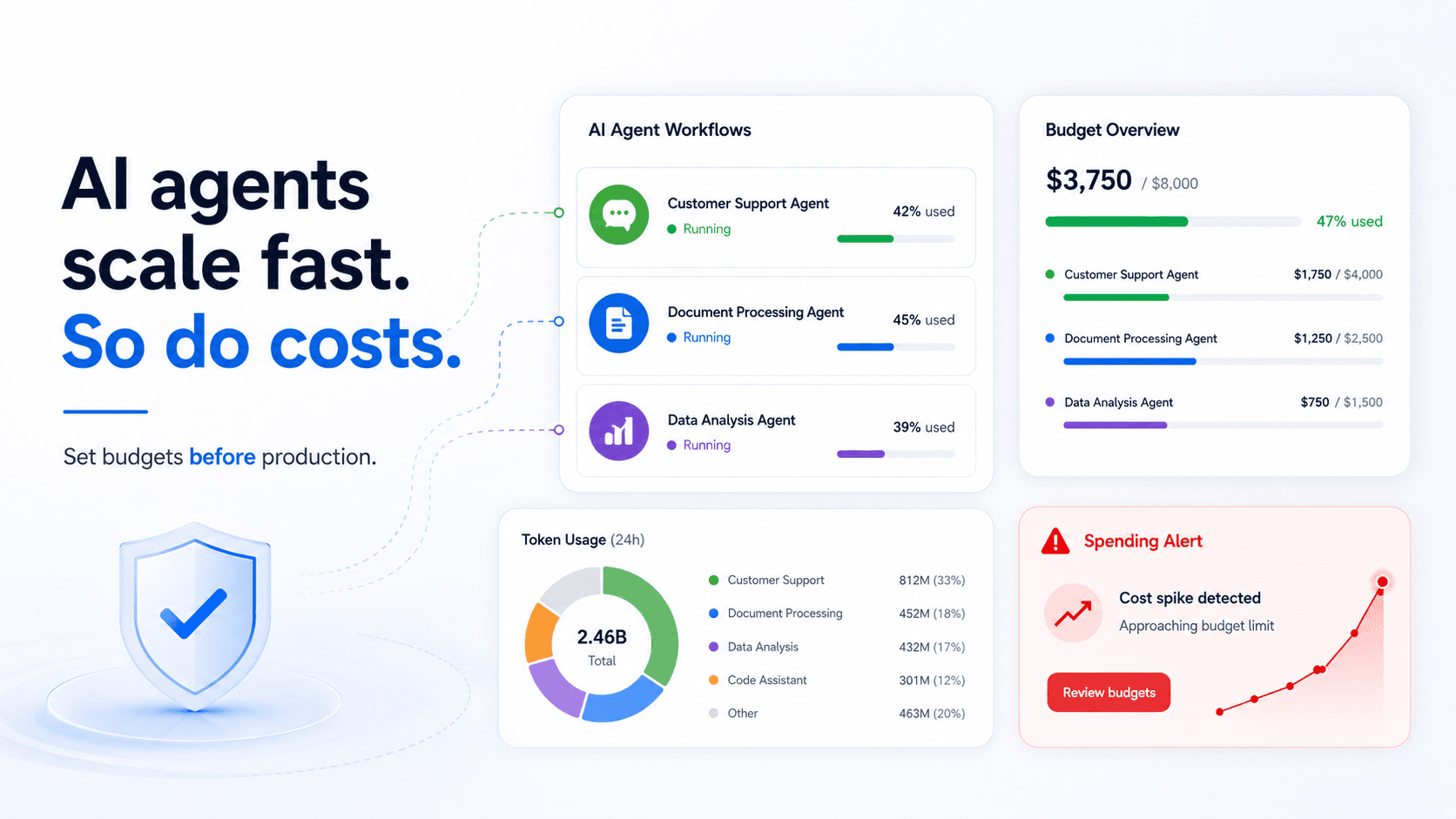
A blended provider bill does not tell you whether cost came from production users, evaluation jobs, support tooling, agents, or developers testing prompts. Before changing models, separate usage by team, application, environment, workflow, and managed key.
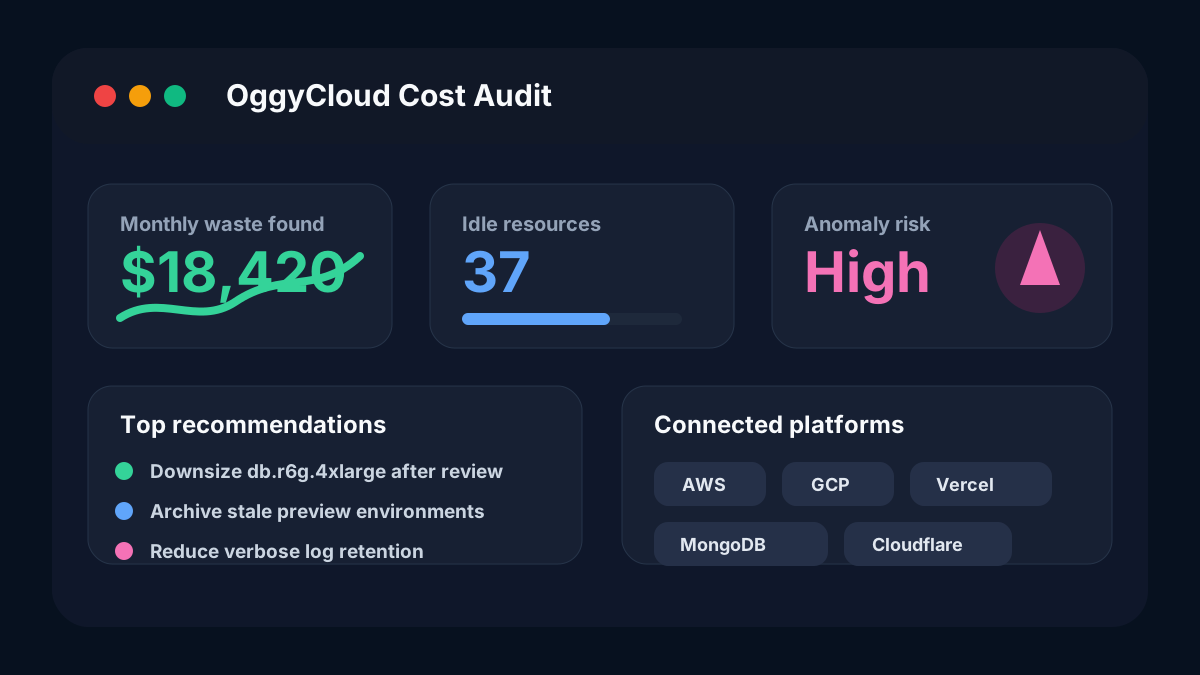
OggyCloud's OpenAI usage tracking workflow is built around that attribution problem: model, project, key, actor, latency, status, tokens, and estimated cost should live in one reviewable view.
- Track input, output, cached, and total tokens.
- Separate production from experiments and evaluations.
- Attach a project or workflow identifier to every request.
Reduce repeated context
Repeated system prompts, retrieval payloads, and long instruction blocks are a common source of wasted input tokens. Cache stable context where the provider supports it, shorten instructions after quality testing, and avoid sending full history when a summary will work.
The goal is not smaller prompts at any cost. The goal is the smallest context that preserves the task's success rate.
- Cache stable instructions.
- Summarize long histories.
- Track duplicate context by workflow.
Route by task difficulty
Classification, extraction, formatting, and simple summaries often do not need the same model as complex reasoning or customer-facing generation. Compare cost per successful task, not just cost per token.
Keep fallback paths for high-value requests, but route routine work to cheaper models when measured output quality is acceptable.
- Measure quality before and after routing changes.
- Use model allowlists by managed key.
- Keep expensive models for tasks that justify them.
Control retries and agents
Retries and agent loops can quietly multiply spend. Track failed requests, timeout behavior, tool-call loops, and jobs that run repeatedly with the same context.
Budget policies should flag runaway workflows early, especially for background jobs and eval pipelines.
- Set per-workflow budgets.
- Alert on retry spikes.
- Review long-running agent sessions.