FinOps for AI teams: token budgets, model routing, and prompt cost controls
How AI product and platform teams can apply FinOps practices to LLM usage without slowing developers down.
AI costs are variable, fast-moving, and easy to hide inside shared keys. That makes LLM usage a natural FinOps problem.
The new FinOps surface area
Traditional FinOps covered compute, storage, databases, network, and SaaS. AI teams add another dimension: every prompt has a model choice, context length, output length, retry pattern, and provider price.
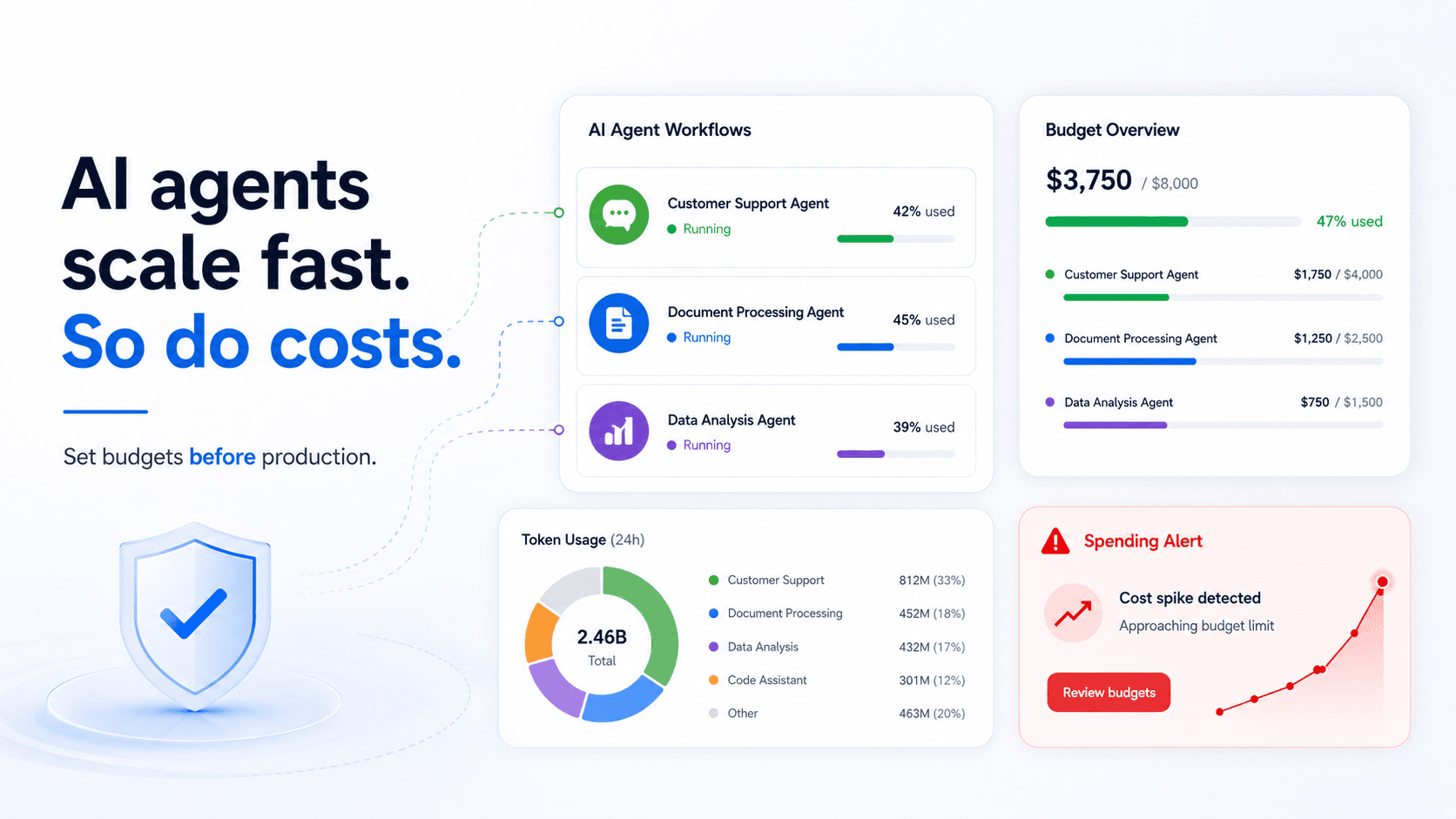
1. Budget by workflow, not just account
A monthly provider invoice does not explain whether cost came from customer support, code generation, analytics, search, or evaluation jobs.
- Use project headers.
- Assign managed keys to workflows.
- Set budgets for recurring jobs.
2. Route by job quality needs
Not every request needs the most expensive reasoning model. Use smaller or faster models for summarization, extraction, classification, and draft generation where quality is sufficient.
- Measure latency and error rates.
- Compare cost per successful task.
- Keep fallback models available.
3. Optimize prompt shape
Prompt cost often grows through repeated context, excessive outputs, and unbounded tool loops. Cost controls should make these patterns visible before finance has to ask.
- Cache stable instructions.
- Limit output tokens.
- Track retries and long-running agents.
How OggyCloud helps
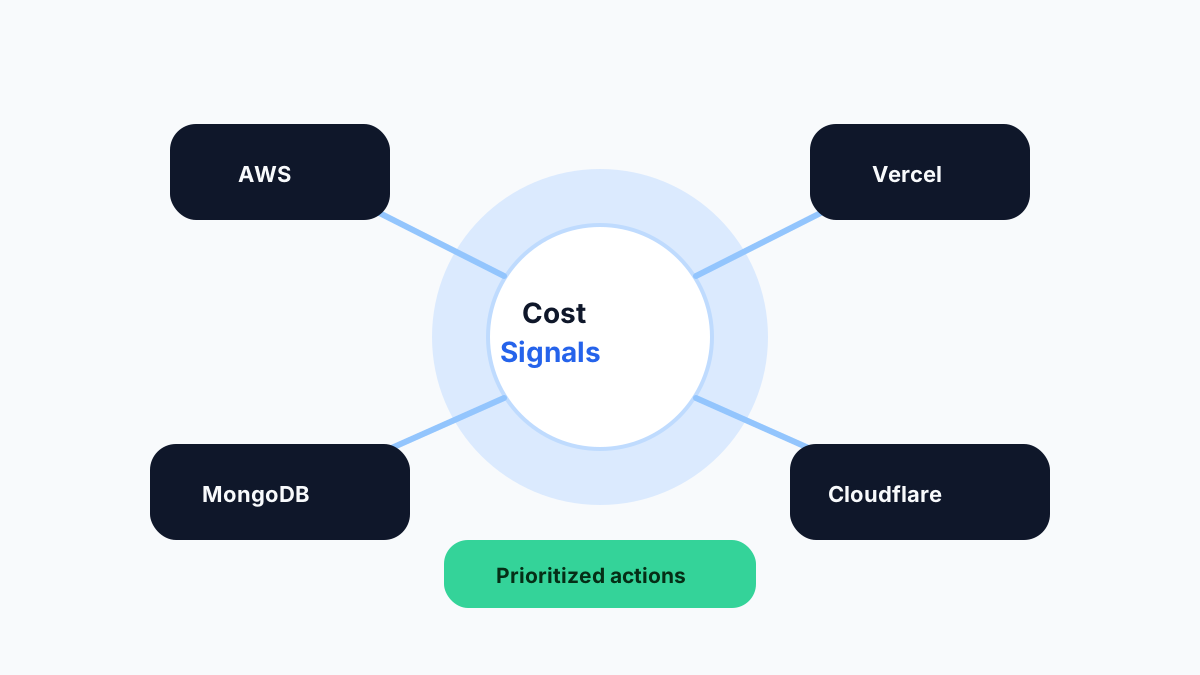
OggyCloud gives teams a place to connect AI token telemetry with broader cloud cost context so optimization becomes an engineering workflow, not an invoice investigation.