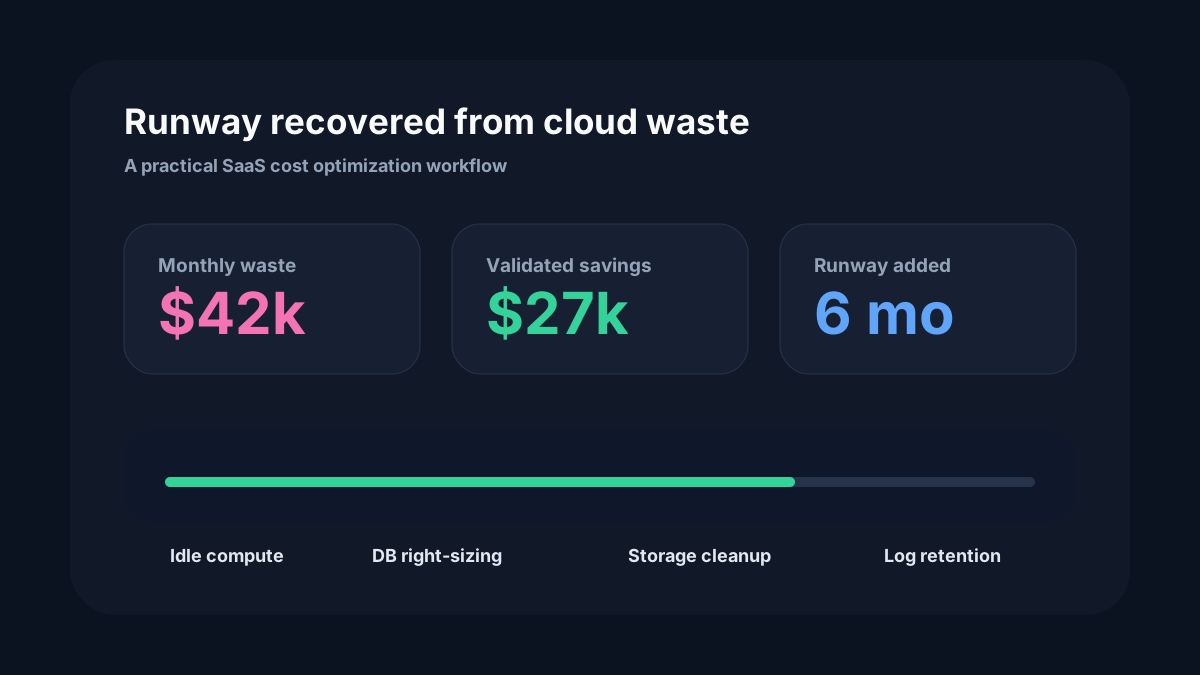
Cloud and LLM token management trends every platform team should watch
Why cloud cost management is expanding into AI token governance, model routing, prompt logs, and multi-provider usage controls.
Cloud cost management is no longer only about compute, storage, and databases. As teams add AI assistants, agents, search APIs, coding tools, and model-powered product features, token usage is becoming a first-class infrastructure cost.
AI spend is becoming platform spend
The first wave of FinOps focused on cloud providers. Teams connected AWS, Google Cloud, Azure, Kubernetes, and SaaS platforms so finance and engineering could understand where infrastructure money was going.
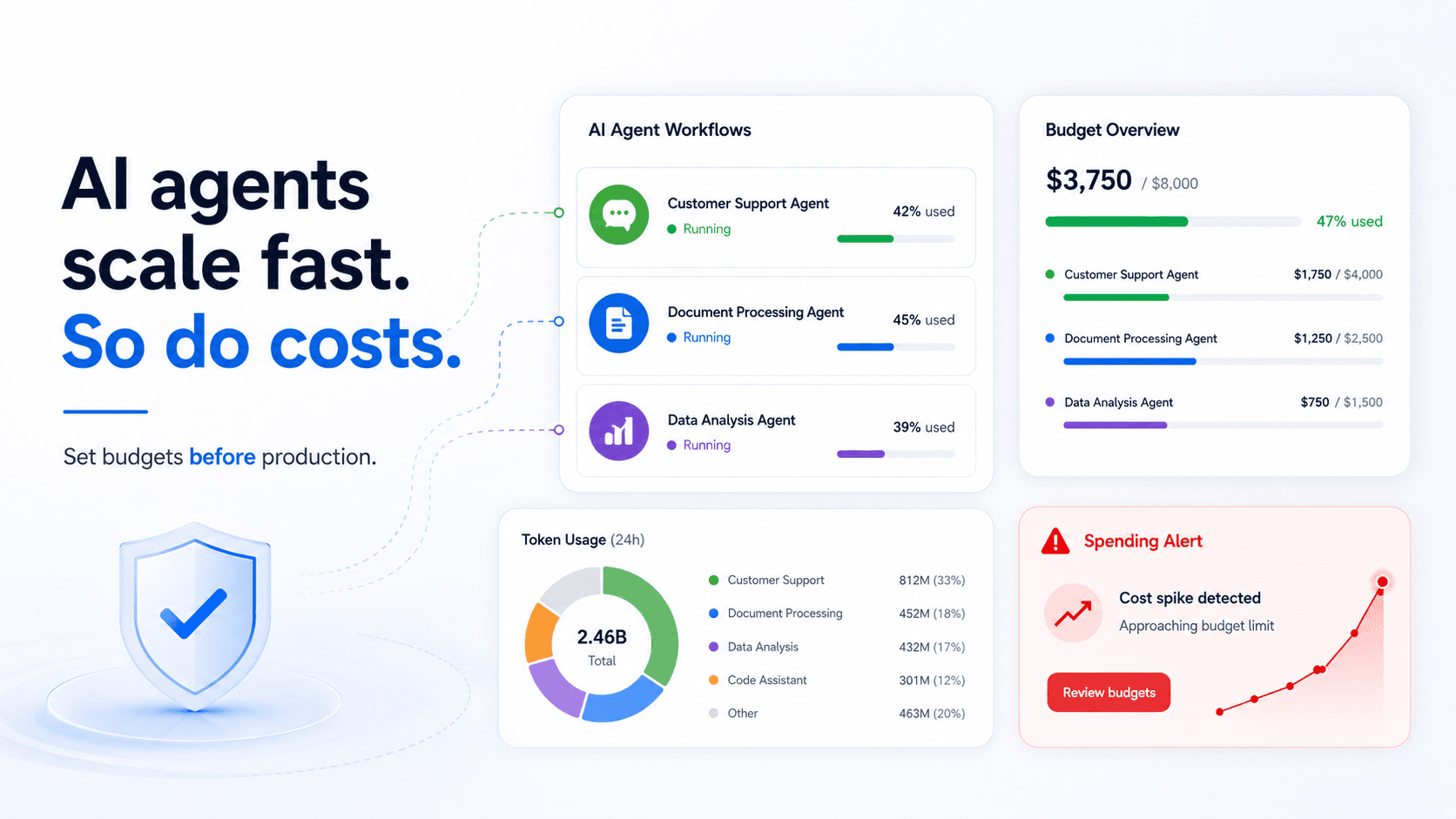
The next wave adds LLM usage to the same operating model. A product team can now create meaningful spend through OpenAI, Anthropic, Gemini, Perplexity, OpenRouter, Groq, Mistral, vector databases, observability pipelines, and internal agents. That spend often arrives faster than traditional cloud cost because every prompt can become a billable event.
1. Token usage is moving from experiments to budgets
During early AI experiments, token costs often sat inside one shared API key or a founder-owned account. That does not work once multiple teams ship AI features or use model-powered internal tools every day.
Platform teams are starting to treat tokens like any other metered resource: track usage by team, project, environment, model, provider, and feature. The question is shifting from whether AI is useful to which workloads deserve which model and budget.
- Assign managed keys to teams, services, and environments instead of sharing raw provider keys.
- Track input, output, cached, and total tokens separately.
- Set monthly budgets or alerts for high-volume tools and product features.
2. Multi-provider routing is becoming normal
Most teams will not standardize on one model provider forever. Some workloads need the strongest reasoning model. Others need cheap summarization, fast extraction, code review, search-grounded answers, or regional availability.
That creates a new management problem: if every team integrates providers directly, usage data fragments across dashboards. Central gateways and OpenAI-compatible routing layers are becoming common because they let teams choose providers while keeping governance in one place.
- Route OpenAI-compatible providers through one internal endpoint.
- Keep provider credentials centralized and issue safer internal keys to applications.
- Compare provider, model, latency, error rate, and cost before standardizing.
3. Prompt and response logs need policy, not panic
Prompt logs are valuable for debugging, quality reviews, and cost analysis, but they can also contain customer data, secrets, or internal context. The trend is not to log everything blindly. It is to make logging explicit, scoped, and governed.
Teams need controls for metadata-only mode, prompt sampling, redaction, retention windows, and access boundaries. The same platform that tracks token costs should also make it clear which keys are allowed to store prompt and response samples.
- Default to metadata and token logs, then enable prompt logging only where needed.
- Separate production logging policy from development and evaluation workflows.
- Expose request details to authorized users without turning logs into a data leak.
4. AI costs need to meet cloud context
LLM spend rarely lives alone. A model-powered workflow can trigger vector search, database reads, queue jobs, observability volume, object storage, and background compute. Looking only at tokens misses the complete cost of the feature.
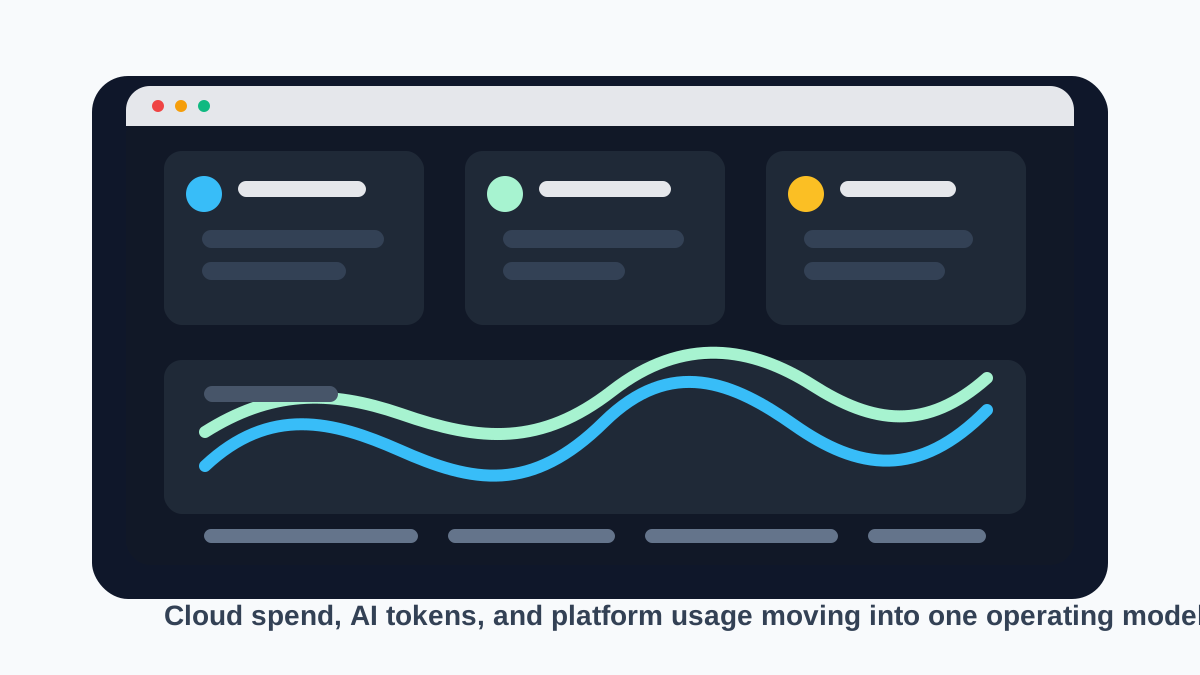
The emerging platform view combines cloud cost, SaaS usage, and AI token telemetry. That lets teams understand whether a customer support agent, code assistant, search feature, or analytics workflow is profitable and operationally efficient.
- Connect token usage to product features, customers, teams, and cloud resources.
- Compare LLM spend with surrounding infrastructure and observability cost.
- Review expensive prompts alongside latency, retries, and error rates.
5. Governance is becoming developer experience
The best LLM cost controls will not feel like finance gates. They will look like better developer experience: one key, one base URL, clear model options, project headers, automatic usage capture, and visible limits before a tool runs up a surprise bill.
That is where platform teams can help. Instead of asking every application team to learn every provider billing dashboard, they can provide a unified gateway with managed keys, provider routing, request logs, and cost summaries.
- Give developers internal keys that can be revoked or budgeted without rotating provider secrets.
- Make usage visible close to the workflow that created it.
- Use provider choice as an optimization lever, not a source of reporting chaos.
What this means for OggyCloud
OggyCloud is built around the idea that modern infrastructure cost is spread across many platforms. LLM tokens fit naturally into that model because they are another metered resource that engineering teams create and optimize.
The practical direction is clear: cloud spend, SaaS usage, and AI token management should live in one operational dashboard. Teams need to see what was used, who used it, which provider served it, what it cost, and what can be improved next.